April fools on the farm

April fools on the farm

We’re running around like April fools now that spring has arrived on the farm. The men are loading lorries, dispatching the last of the corn which is still in the barns, and when the barns are empty they’ll have to be cleaned and readied for this year’s harvest. The lorries arrive at random times and often with little warning. Sometimes our early wake-up call is from a driver who needs ‘talking in’ from whatever situation his sat nav has landed him in:  “I followed the postcode, but it’s taken me to a pub/tree/housing estate…” Much like our internet connection and mobile signal, it seems satellite navigation can only be relied on in cities.

This year’s crop is still green in the fields and, as the earth warms up, needs tending with nutrients and never-ending pest control. The autumn drought in the east of England, followed by an onslaught of pigeons and deer, has hammered our oilseed rape this year. We’re nurturing it, and trying to remain optimistic. There are hopeful buds on the plants, and only time will tell if they come to abundant fruition.

dsc_0855.jpg


Back at the farmhouse, it’s also the end of the tax year, so alongside tidying barns we’re tidying paperwork too. Filling in forms while the hedgerows bud, scabbling data together on rainy days when the land is too wet to run on and the lorries aren’t queuing up.

DSC_0860

Thrown into the mix of April madness there’s Easter, and work on our barn conversion scheduled to start any minute. Preparations which require thinking ahead, another barn to be cleared, foundations to be excavated and a row of hideously overgrown Leylandii (planted to shield the stable from a westerly wind) which have to be taken down before we can get going.

And then there’s the biggest time consumer of them all: Barley the puppy, who’s got us all spinning like April fools.

DSC_0820

Writing? No chance.

Rustic Guest Katie Attwood – One Foot in the Stirrup

Rustic Guest Katie Attwood – One Foot in the Stirrup

My rustic guest in the farmhouse kitchen this week has come all the way from Australia.

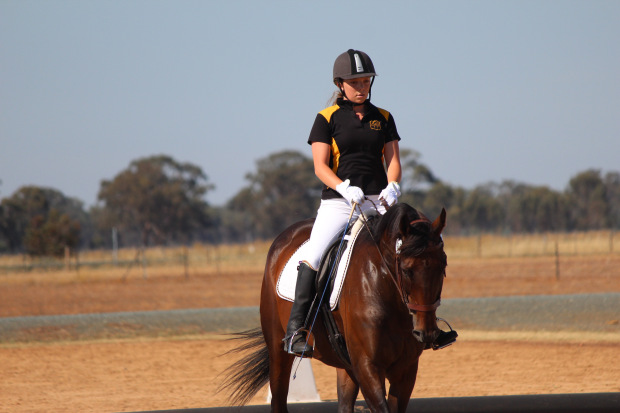
Katie Attwood is a para-equestrian who, in her own words, “plans to take on the world… minus a foot.” I love reading Katie’s posts about her travel and equine adventures, so a big thank you to Katie for letting me share a little of her story here.

Over to Katie, who’s chatting about the horses in her life.


Meet the Crew

So as you can grasp from my blog, I’m going to be doing a fair bit of writing about my horses, other horses, and just every horse in general! As you might be able to tell I love my ponies! And I thought with this post I might introduce you to my current gang. Now […]

via Meet The Crew — One Foot In The Stirrup

Read all about Katie’s Para-Olympic quest by clicking the link to visit her site or by liking her page on Facebook .

Rustic Guest Chrissie Parker – The Beauty of the Grand Western Canal

Rustic Guest Chrissie Parker – The Beauty of the Grand Western Canal

_MG_2415crop (1)I’m welcoming Chrissie Parker to the farmhouse kitchen today – do grab a chair and join us.

Chrissie is passionate about ancient history, archaeology, travel, and the beautiful countryside around her Devon home where she lives with her husband.

A woman of many talents, Chrissie is also learning to play the ukelele, and that’s alongside her work as the author of thrillers, historical fiction and poetry. Her novel Among the Olive Groves won an historical fiction award in the 2016 Summer Indie Book Awards.

Today, Chrissie is walking us along the Grand Western Canal. It sounds, and looks, truly magical.


The Beauty of the Grand Western Canal

I love being a writer, but sometimes it can be quite solitary and a break is needed from sitting behind the computer. Near to where I live in Devon, is the Grand Western Canal. It’s just over eleven miles long and starts at Tiverton basin, winding its way through the rolling mid-Devon countryside, before ending abruptly at Lowdswells close to the Somerset border.

Image 1 Canal General

The Grand Western Canal was the last canal to be built in the UK, work started on it in 1810 and finished in 1838. The original intention was for it to link up with the Taunton canal/river Tone, but it was never completed due to the advent of the railways which is why it ends so abruptly. The canal was built to transport coal and limestone, there are two old limekilns, the remains of an old quarry railway, and The Waytown Tunnel – a barge wide tunnel at Greenham. The canal meanders its way through the countryside, and has no locks due to the way it was constructed. At Lowdswells the canal continues as a rough, dry section, and it is possible to walk the intended route, around 13miles, to Taunton. This section has remnants of locks and lifts, and  I especially love exploring this section, wondering what it would have looked like if it had ever been completed.

Image 2 Lowdswell canal end

Nowadays, the canal is a conservation area. There is a lot to see especially if you love a multitude of wildlife that includes swans, moorhens, ducks, and a variety of other birds such as birds of prey and kingfishers. Pike and other fish haunt the depths of the water hiding among the vegetation and it is also home to elusive otters. The canal is beautiful, serene, and a perfect place to walk whatever the weather. In winter fog hugs the water and ice clings to the bare branched trees. In spring the towpath fills with colour as daffodils, bluebells and primroses bloom in riotous colour. In summer growing cygnets paddle the water accompanied by their proud parents, enjoying the bright sunshine. In autumn leaves of russet and gold flutter to the towpath and vegetation dies back to prepare for another winter.

Image 4 Canal Bridge

As well as being a haven for wildlife the canal is also a popular tourist attraction. Runners, walkers and cyclists stretch their legs daily, kayakers and paddle-boarders explore the water, and fishermen cast their lines in search of a catch. At Tiverton basin the history and heritage of the canal is displayed in a small museum, a colourful horse-drawn barge offers visitors the chance to experience a trip along the canal, and there are two tearooms, where weary visitors can rest their feet.

Image 5 Tiverton Canal Company

Wherever you look, there is much evidence of the old canal industry, and I love imagining what the area would have been like at its height during the industrial revolution, as it seems so far away from the conservation area that it has now become. As well as the canal so many other interesting things sit right on my doorstep. We’re surrounded by public footpaths that take walkers across fields, up the back of the old quarry and through a long avenue of trees. Others wind their way across fields of corn, sheep and cows to surrounding villages, and there is an old monastery that dates back centuries.

Image 7 Waytown Tunnel

Each time I step out from behind my computer and go for a walk I’m very grateful to be able to live where I do. No two walks are the same and I really do live in the most beautiful place in the UK.


To find out more about Chrissie visit her website www.chrissieparker.com follow her blog or link up with her on social media – Facebook, Twitter, Instagram and Goodreads.

Meet the author in her natural habitat

Meet the author in her natural habitat

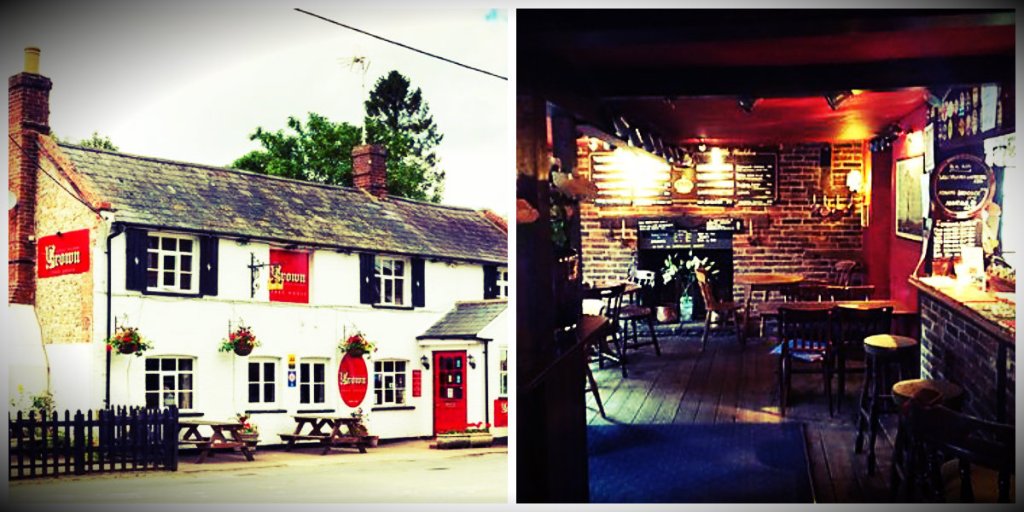
What better place for my new book signing than down at the local, and how lucky are we to have such a gem on our doorstep?

‘The Local’ – a pub where locals meet for a catch-up and pint, a g&t and gossip, or a dinner of hearty pub grub (next to the roaring log burner).  The heart of the village! All cliches because they’re true, be it the Fox and Hounds in Draymere, or the pub down the road from you. So I’m very grateful that our lovely hosts are letting little-old-me use their warm and welcoming bar for my book chat.

Grateful, but a tiny bit panicked. It doesn’t come natural, this speaking in pub(lic) lark, I’d far rather write it down. I’m talking to myself in the mirror again (the first sign of author madness?) and practising my signature, which should be easy, but I managed to sign Sam Reading the other day (it started so well).

My special authograph pen (gifted by eldest daughter) is primed and ready to go. I’ve managed to find passages in the book which I can read out loud and (a) don’t give the plot away, (b) aren’t too steamy. But my mind is inventing first night fears – what if no one turns up? What if someone turns up? I pity the poor sods who wander down for a quiet pint and find themselves thrust into romance. Or maybe they’ll enjoy it.

As will I, when I get there. I always do.

Gentle reminder to self; don’t overdo the Dutch courage.


Rustic Guest Julie Stock -Vines, Wine and Romance

Rustic Guest Julie Stock -Vines, Wine and Romance

dscn8886I’m chatting to Julie Stock in the farmhouse kitchen today and, given the theme of Julie’s post (and of her new novel The Vineyard in Alsace) we thought it only proper to forgo tea and biscuits in favour of a nice glass of vino.

Julie and I met through the Alliance of Independent Authors and we’ve been in touch throughout our self-publishing journey, with our paths following uncannily similar routes. I’m chuffed to have Julie with me today.

Can I tempt you to a glass…?


Vines, Wine and Romance

I have lived with my husband and family in Bedfordshire for nearly thirty years now, having moved out here from London shortly after finishing university. I grew up in a big new town (Slough, for my sins!) so I’d never really experienced rural life much before then. I remember finding it so difficult to get to sleep when we first moved because it was so quiet and I was used to lots of noise. Now, the peace and quiet (most of the time) is one of the things I love most about the countryside.

Once I was made redundant from my London job, I started work at The Wine Society in Stevenage and I started learning about wine and winemaking (There might have been a bit of wine tasting involved too!) I was also lucky enough to go on a trip around France with one of our wine buyers to see how he went about choosing wines to sell in the UK. I found the whole process of growing grapes magical and in my dreams, I wondered if I might one day buy my own vineyard and grow grapes too. Now I am older and a bit wiser, I know just how hard a job this is – a year-round job, in fact, like any agricultural industry, and something I’m not sure I’m cut out for.

Interestingly, Bedfordshire has its own vineyard near Old Warden. Warden Abbey has planted vines on its site since medieval times when Cistercian monks tended the fields. Today, the vineyard operates as a not-for-profit venture, offering a unique community and educational resource – and the tradition of making medal winning wines continues. Bedfordshire Rural Communities Charity works with other local charities, organisations and local schools to offer social and therapeutic horticulture, learning and skills development, help for people into employment or voluntary work, a range of volunteering opportunities for local people and community groups, and a great chance to be involved from vine to wine, as well as wildlife and heritage projects. We have visited the vineyard on a number of occasions and it never ceases to amaze me just how tirelessly they work, against the elements most of the time, to produce wines in our very fickle climate.

My latest romance novel is set on a vineyard in Alsace in France and takes place against the backdrop of the harvest. I did lots of research of course to add to the knowledge I already have of what really happens during a harvest, and it convinced me that no matter how romantic it all sounds, it really is hard work. Most of us have no idea of the amount of back-breaking work that goes into making our delicious glass of wine, or any other product of course.

When we moved out here all those years ago, I had no idea of course that I would work in the wine industry, nor that one day, I would write a romance novel set on a vineyard, let alone have a vineyard on my doorstep. I now work part-time for a local charity myself and my daily drive through the countryside, passing those vineyards is one of my greatest pleasures.


Julie Stock is an independent author of romance novels, novellas and short stories. She has just published her second novel, ‘The Vineyard in Alsace’ which is available on Amazon.

She is a proud member of The Romantic Novelists’ Association. She blogs regularly about her self-publishing journey on her website, ‘My Writing Life.’ You can also connect with her on Twitter and via her Facebook Author page.

The Vinyard in AlsaceIs there really such a thing as a second chance at love?

Fran Schell has only just become engaged when she finds her fiancé in bed with another woman. She knows this is the push she needs to break free of him and to leave London. She applies for her dream job on a vineyard in Alsace, in France, not far from her family home, determined to concentrate on her work.

Didier Le Roy can hardly believe it when he sees that the only person to apply for the job on his vineyard is the same woman he once loved but let go because of his stupid pride. Now estranged from his wife, he longs for a second chance with Fran if only she will forgive him for not following her to London.

Working so closely together, Fran soon starts to fall in love with Didier all over again. Didier knows that it is now time for him to move on with his divorce if he and Fran are ever to have a future together. Can Fran and Didier make their second chance at love work despite all the obstacles in their way?

The Vineyard in Alsace is a contemporary romance set against the enticing backdrop of the vineyard harvest in Alsace in France.

Rustic Guest Mac Logan – How to Find Peace Without Really Looking

Rustic Guest Mac Logan – How to Find Peace Without Really Looking

Today, I’m happy to welcome my first rustic guest to the Farmhouse Kitchen.

mac-loganLet me introduce you to Mac Logan, an author from Scotland, who not only writes gritty, edge-of-your-seat thrillers (a Scottish Stieg Larsson!) but who is also lucky enough to live in the stunning and dramatic East Neuk of Fife.

Mac and I met on Twitter, and he’s been a great virtual friend and supporter of my rustic writing efforts, so I’m delighted to share Mac’s thoughts on rural life with you here.

I’ll put the kettle on, you sit back and enjoy.


 In every walk with nature one receives far more than one seeks. John Muir

Find peace?

What do you do if peace finds you? Can you help its search?

When I seek quotes about peace, mostly I find contrasting ideas, you know:

• the opposite of war – with countless homilies,

• an internal “good thing” that happens when you do “good” exercise, deeds, spiritual things, and so on,

• if you speak Scottish you’ll know sandwiches get a mention, (so what if the spelling’s wrong?)

Easy to Find?

What I seek is easy to find … but not in crowded places. It’s all around us, yet can lack the buzz and zip of a packed city. People miss it, yearn for it, yet seldom find it.

Strange thing, this “peace”.

Want an example?

Will a definition help our search?

peace [piːs] noun: freedom from disturbance; tranquillity.

Could this hint at both an inner and outer reality? It’s all over the place near where I live. You’ll find it too, anytime you drop by.

Bliss of peace

A hectic life with peaceful spaces may be as good as it gets these days, unless … Unless you live with and within the beauty of nature … like me, like Sam.

When Sam asked for a few words she rural headed her agenda. If you read her books, you’ll know why, even if there are city interludes and rolls in the hay. You know what they say up here: there’s nothing like the sleep of the just, but even better, the sleep of the just after. Talk about blissful peace.

I’m lucky enough to live in the country. North of the Border, true, and in the incomparable East Neuk of Fife.

Peace is all around

I made the Kilconquhar Loch video late May last year.

Rambling along a quiet lane I came to an incredibly green bank and sat on a dry stump. Warm air ruffled my hair like a lover’s caress. For a moment I slipped out of time.

Without really looking

Peace found me, I didn’t have to go looking. There, free from the noise and turmoil of modern life, stress oozed out of me as peace took its place.

Thinking back I smile and promise myself a wee dram when I finish this draft. I know peace will find me again in a soothing amber glow from a crystal glass.

Peace to you …


If you want to hear more from Mac, you’ll find him, his blog and more about his Angels’ Share series of books by clicking the image below. Mac also hangs out on Facebook and twitter, do follow him there.

angels-share-series

The USAAF in an English Hamlet

The USAAF in an English Hamlet

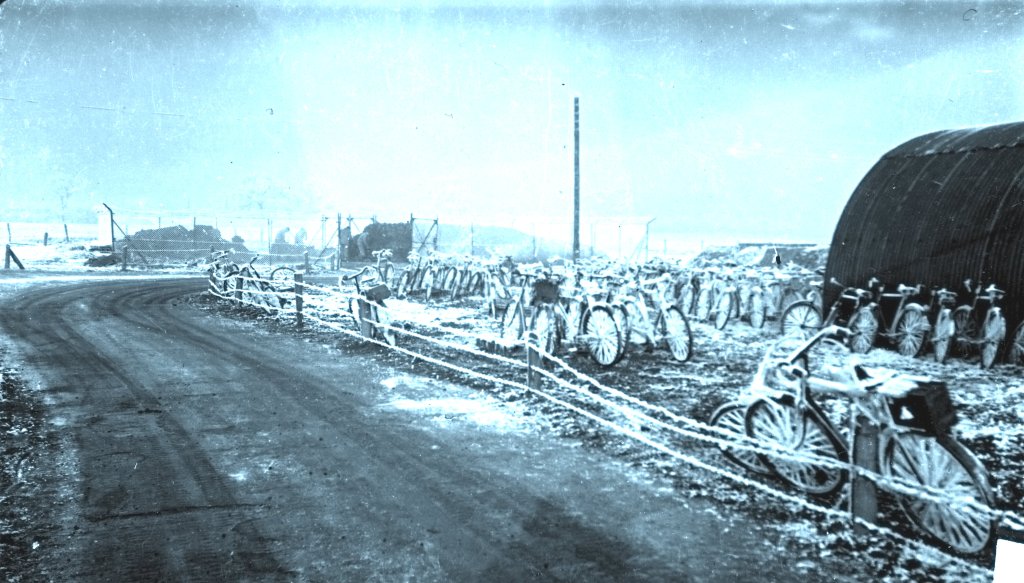
I’m Anglo-American themed this week. We live and farm on one of the many old airfields in the East of England which hosted the United States Army Air Force during World War II.

The runways are farm tracks now, and the Nissen huts store agricultural clutter, but that history has the power to snare.

As a child, I knew the ‘drome’ well. I didn’t live on it then, but I rode my pony over the concrete paths, cycled across it to reach the nearby village and played with mates in the control tower. There was a chalk board with writing still on it, we all thought the place was haunted. control-tower

Later on, I crossed the drome on my way to work, sometimes behind the snow plough as the farmer forged an escape through car-high drifts which often covered the road on that wide, treeless plateau (back in the olden days, when we had proper snow). But it wasn’t until I married and moved to the drome that the story of the people who had lived and worked there became real.

The plough turns up flints, hardcore for runways, and the land offers up all manner of military shrapnel. We dredged the pond and found a pair of discarded army boots, there’s a rusting belly tank a mile along the footpath and one of our fields is called ‘bomb site’.

Some years ago we excavated a single propeller from its resting place deep in the earth. It came from an A-20 Havoc, which crashed returning from a combat mission, on the 30th July 1944. The crew are buried in the American Cemetery. Three of the many young American men who didn’t make it home.

a-20-havoc

I can barely imagine what ‘our’ airfield was like at that time, for the locals who lived there, or for the brave men (and boys) of the USAAF who were fighting so many miles from home. Our village has sewn a banner to remember them, it hangs in the church, and we’ve collected some of the villagers’ memories in a booklet. Here’s an excerpt:

Reg remembers that you could hear planes warming up for morning raids before you got out of bed in the morning, and he used to go up to the aerodrome with his friends before school to watch them all take-off. The aircrew were briefed in a hut which still stands on the lane, and is now in use as a workshop. Guards stood in place outside the doors when a briefing was taking place. The planes’ engines were warmed as they stood on the dispersal points around the airfield, before being topped up with fuel. Then they went to the ends of all three runways and took off in different directions, crisscrossing as they climbed. The whole lot would be up within minutes. They would circle once, get in formation and be gone. And when he came home from school Reg got back on his bike to go and see what damage had been done and how many of the planes had not come home, leaving empty parking bays.

The local history reminded us of happier stories too.  Christmas parties for village children, dances and friendships which endured through the years and across the Atlantic long after the war had ended. The exchange of eggs and milk for nylons and gum. Flowers picked from Cottage gardens and offered to English sweethearts by American Servicemen. Marriages and heartbreak. Families welcoming servicemen into their homes; baseball and big band music.

The village knew something was changing when white stripes were painted on the planes, but when the USAAF Eighth Force left they were gone overnight. There was no chance to say goodbye, and the airfield stood derelict.

 ‘All that life and excitement, and then they were gone.’

The Tudor farmhouse stood throughout the war, and saw good use as a secret meeting place for American airmen and their sweethearts, as an adventure playground for local children and as target practice for dummy bombings.

tudor-farmhouse

Margaret remembers the old house as a magical place, with rambling roses and beautiful, big windows; but Reg remembers it as a ‘knocking shop’ for the Americans!

Anglo-American rustic romance.

A Tale of Two Dogs, episode 2 (Partners in Crime)

A Tale of Two Dogs, episode 2 (Partners in Crime)

As an only child, Russ was an itinerant, a bolter. We have far too many feral temptations on the farm: The hedgehog in the paddock, the muntjac in the woods, deer that will run for miles when there’s a dog (and me) chasing them. And the postman’s red van, although our postman isn’t feral. He carries dog biscuits.

img_1352
He’s thinking of going here – note the firm grip.

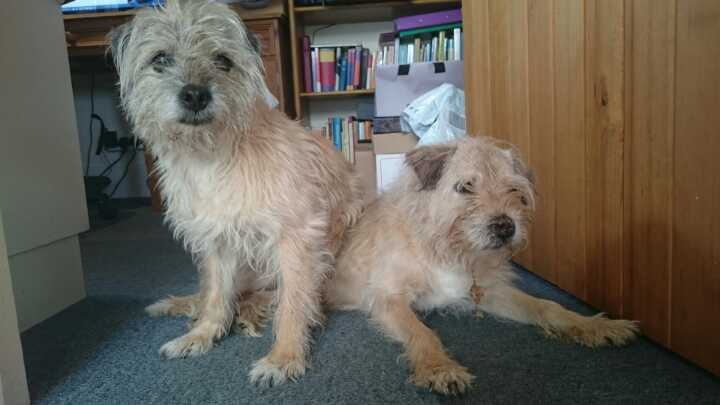
We hoped that having a friend would encourage him to stay home. Oh, the sweet naivety of that idea. We were about to encounter the full force of Border terrier itinerancy.

What had been solo, forty-minute forays became twenty-four hours of canine sortie when they were hunting as a pack. And Meg was fast. No point in me running now (phew), all I could see was two brindle specks on the far, distant horizon.

They never learnt recall. The best you might get was a contemptuous stare, and that was only if you were lucky enough to be within staring distance.

2015-05-27-13-59-36
You try getting both of them in shot

I’ve spent many hours on torchlight hunts, untangled leads wrapped around branches, apologised to too many neighbours (and to the security men at the nearby science park, who caught them on CCTV. They were chasing the swans).

I’ve retrieved those dogs from three different counties, but they usually turned up on the doormat after I’d spent the night sleepless with worry. Knackered, bloodied and bruised (that was them, I was just knackered), wearing mud-heavy clogs, their coats matted with our very own super-bonding clay, and frequently infested.

Have you met seed ticks? The veterinary nurse at our practice hadn’t, she thought I was being hysterical. ‘Bring them in, we can sort that out.’ And she came at them armed with tweezers.

Now seed ticks are not just your common or garden tick (I’ve tweezered off plenty of those little buggers. I recall that my best [or should that be worst] count was thirty-six ticks. Removed from a single dog, In one session).

She can’t say I didn’t warn her, that nurse. Her face was a treat, and I can’t deny the thrill of satisfaction that gave me. We were, at last, united in hysteria. Hundreds, nay thousands, of miniscule black ticks. Like poppy seeds, but evil.

The nurse put her tweezers away and sent me home with some Napalm.

border-terrier-in-bath
Oh dear

Tune in next time for episode three (My Dog’s Got no Nose).


Looking for holiday romance…

Looking for holiday romance…

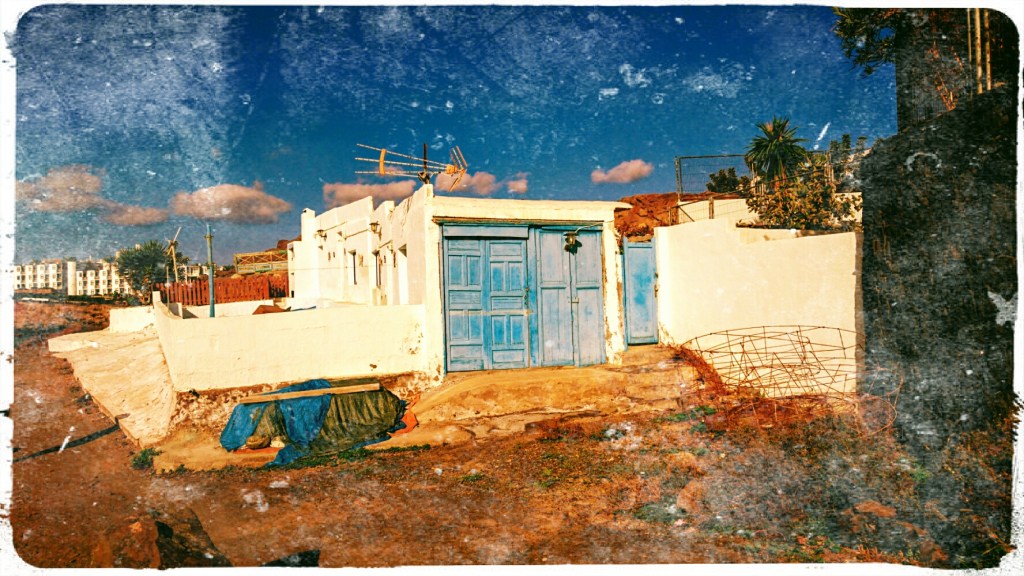
img-20161119-wa0008I was in Lanzarote last week. That near-barren island of glinting black sand, volcanoes and fields of charred lava. Sheer rock faces that plummet into the deep blue Atlantic and waves that explode on the shore with flumes of white spray.


dsc_0607

There is nothing gentle about the landscape in Lanzarote, it is awe inspiring. Powerful and dramatic. It turned my head to the idea of romance.

I’m waxing lyrical, and I’m talking fiction, of course. I can’t help myself. As a writer every new place, vista and experience holds (as yet) untold potential.

dsc_0578

A hero forged from molten rock, a narrative spun over sharp peaks and yawning craters. A heroine trapped by the ocean.

 
dsc_0602

A passionate love story rising out of the sun-baked land.

Ah, for the inspiration of a setting so poetic that the plot (almost) writes itself.


A Tale of Two Dogs, espisode 1 (Game is Right)

A Tale of Two Dogs, espisode 1 (Game is Right)

The Kennel Club standard describes Border Terriers as ‘active and game’ and ‘essentially a working terrier, capable of following a horse.’

Game is right.

My little big man (Russ) arrived in our life in 1998, and he was game from day one: Tripping over my heels as I trudged to the stables, ready and willing to grapple with a 17 hand horse that didn’t want to share its breakfast. Plucky little chap, it was love at first sight. I was smitten, and I basked in the satisfaction of being his leader, protector and mistress.

For a few precious weeks, until puberty struck and he underwent a werewolf-like transformation, morphing almost overnight from mild-mannered pup to canine rebel commando.

Never nasty, nary a growl or a grumble at any human, but Lord have mercy on the rest of the animal kingdom. If it moved he wanted to kill it, and if he couldn’t do that his job was to tell us it was there, outside the window. He could tell us all night if need be. The word ‘dogged’ could have been coined for my little big man.

But I must be game too, because in 1999 I went back and bought his half-sister.

Nutty Meg spent her first night with us suspended over the wooden rail between the legs of a kitchen chair. I would like to stress that this was very much her choice, not mine. I wondered what the hell I’d bought into the house, and employed every method of persuasion that I had in my arsenal. None of them worked. The puppy bed and hot water bottle were rejected in favour of a wooden hammock.

Nutty Meg trembled a lot, a combination of attitude and several neuroses. Little big man found her existence beyond annoying, but he took it well. The mildest of profanities when she hung off his ears and attacked him in his bed. He told her off once, when she got over-frenzied playing tug-of-war with Youngest Daughter’s sock. That was the first and last time she listened to him. Or to anyone, come to that.

Nutty Meg wasn’t scared of any living thing, but she was phobic of crossing the kitchen floor, hated water but laid down in muddy puddles. She took on the farm truck (and lived to tell the tale), slept with the cat and washed little big man’s ears. Wouldn’t eat her food, but was ferocious if anyone tried to remove it. Would rather be carried than go for a walk, but could outrun a gazelle (if need be).

And I can confirm that Border Terriers are capable of following a horse… If they want to, and if the horse is going the way they’re intending to go.

A neurotic lap-dog/feral bitch and a canine rebel commando.

Two Border Terriers, about to gang up, and the adventure only just starting. Tune in next time for A Tale of Two Dogs, episode 2 (Partners in Crime)